Showing posts with label ADVERTISING. Show all posts

Monday, 13 January 2014

8 Ways to Keep Your Social Media Updates Fresh

Small business owners managing their own social media often ask the same question: "How can I keep my updates fresh and engaging?"

It's no easy task. If one were to poll marketers and business owners alike, he or she would find that creativity and the challenge of keeping updates from becoming stale is a top concern in social media. Luckily, at Omnicore Agency, our team of social media experts never run out of good ideas.


Taking a page from their book – and asking their recommendations – we've compiled a list for you to use the next time you get stuck on what to write, or for those moments when you need your content to pop, or those instances where you want to take what you've been doing to the next level. No matter what your social media challenge, these tips for keeping your social media updates fresh are sure to make managing your social channels a whole lot easier -and more successful!
  • Don't Always Talk About Yourself: This is the key to success in social media. Don't just share links to your site or overly promotional posts. Be human, be conversational, and talk about the good words of others, including sharing their content, their links, or their creations (with credit, of course)!
  • Check the Date: No idea what to post? Check the calendar! Each month - or even each day or week, for that matter – plays host to a variety of holidays, awareness weeks, and events. Find the ones that tie in to your business and find a way to connect with your audience over those occasions. Not only is it timely, but it's also unique. Try implementing date or time-specific promotions through social media that relate to the occasion, host chats or streams using hashtags relating to that event to raise awareness and generate conversation, or create graphics associated with that specific event and share them throughout your social channels.
  • Crowdsource: Your social networks are a goldmine of opportunity for content, so source from them on occasion when you need a break. Ask for photo submissions for a contest, or retweet their answers to a poll, prompt, or question. It gets the conversation going and has the potential to grow your audience at the same time. Bottom line: ask for their input!
  • Quotations and Questions: Questions and quotations are always good for sharability and engagement.
Quotations are good for more inspirational or lighter topics – for an added bonus, turn that quote into a graphics that's pinable and sharable for maximum impact. When choosing quotes, go for something fitting for that day, a particular topic, or just your industry in general. If you can, find a way to connect it back to your own business by sharing that quote and then linking to a content piece you've created that uses that quote or connects back to it in some way. Alternately, post a quote and then ask a question relating to its contents to try to ignite some feedback.

Questions alone, on the other hand, are good for getting valuable feedback and sparking conversation. Just make sure the questions aren't too complicated or too controversial. Think of questions you might ask in a focus group or customer survey, or go for the conversational/laid-back sort of questions one might find in small talk – you may be surprised on who you connect with! Speaking of questions, also use your social channels to answer them. If you have FAQs, do a Q&A post series and then make that content perform double duty by turning those Q&A updates into a blog post or other content piece. Answer questions builds credibility and connects with the customer.
  • Add Visuals: Adding videos, photos, or graphics instantly makes your status update more attractive, plus, it boosts your potential to have it shared across multiple channels (research shows it!) . Take the time to enrich a post with a photo or a video you've created – you'll be surprised at the increased levels of engagement you'll see as a result.
  • Make the Next Step: Post a teaser of something and then link to the content or landing page where they can get more info or explore something more indepth. Think calls to action when you make your updates!
  • Search for Sources: Stuck on where to find the topic of your next tweet or status update? Check these standby sources for new information and inspiration:
  • Today's Headlines: current events are always a great way to generate conversation. Just approach with caution and make sure you're choosing topics that are relevant and reflective of your brand in a positive way.
    Industry blogs or websites: see what the buzz is in your industry and share it with your audiences!
    Your competitor's websites and media channels: if your competitors are writing, tweeting, or blogging about it, it's valuable – look at what they're doing and see how you can do it better.
    YouTube: videos are great ways to look at a topic from a visual angle. Look for industry relevant videos and see how they might be shared or turned into a status update.
  • Flickr: like YouTube, Flickr can also be a great way to get inspiration for a status update, simply by looking at a topic from a more visual angle.
  • Pinterest: do a search or two for phrases relevant to your industry and see what content is out there – can you create something similar or better to share?
  • Slideshare.net: look for slideshows for snippets of information that are ultra-sharable through social media and may inspire presentations of your own.
  • Your swipe file: if you don't have one, you need one! Here's how to make one.

  • Your latest newsletter: look through your latest email marketing blasts – is there something there that could be shared through social media too?
  •  Your blog: check your blog for recent posts and see if you can condense down your post takeaways into tweetable, shareable, or Facebookable snippets.
    • Short and Sweet: Research shows that on Facebook, shorter posts tend to perform better in terms of engagement and views, so keep that in mind when making an update. Don't be afraid to make a short exclamation and let it roll from there.

These are just a handful of tips (there are countless more and we'd love to hear some of yours in the comments!) for keeping social media updates fresh. The key thing is to not do the same thing over and over again. You know this as a common sense takeaway, but it can be tempting to do so. Remember that Mark Twain quote about insanity – it's when you do the same thing over and over and expect a different result. Don't do only the same things!

Article Source: http://socialmediatoday.com/salman-aslam/2059286/8-ways-keep-your-social-media-updates-fresh

Wednesday, 27 November 2013

Become a social media leader - 5 top tips!

Thinking of becoming a social media 'leader'? Need ideas and help as to help launch your business or your blog into the public domain? So how do you keep a happy and successful online presence? Whatever you are using it for, there have been 5 top tips created to help you out.

Image: http://us.123rf.com

Twitter is one of the biggest and most influential sites social media has to offer. But shockingly, a third of users that are registered do not even use it. This is very likely down to the fact that they don't know how. This is not uncommon.
Now, once you are set up and have the basic idea of how the site works it really is about getting out what you put in. The 5 top tips for successful social media are below:

Filter what you say online. We’ve all heard the stories about how a few keystrokes can end a career. To avoid foot-in-mouth on Twitter, I filter all my tweets through this rule: Would I be comfortable if The New York Times attributed what I’m tweeting to me? I never approached Twitter with the idea that it would be an ultra-confessional stream of consciousness. Treating my Twitter stream as if I’m on the record with a journalist gives me a good guide about what is and is not appropriate to share. It’s not to say I don’t have fun and share personal stories, but putting each tweet through that filter helps me assess before hitting the tweet button.

Set aside some time. Let’s be honest: we all are incredibly busy. So how do I find the time? Every day, several times a day, I set aside a few minutes to check on Twitter. Some days it’s three minutes and some days, when big events happen, it can be a lot more, but if Warren Buffett and Bill Gates can find the time that certainly says a lot. With the app on my phone, I can do a quick scan between meetings or respond to a message while waiting in line. When you invest time in Twitter, you quickly start to see the rewards, mostly in real-time conversations happening all over the world. No one expects you to be Nick Kristof or Lady Gaga overnight.

To what end? Know why you are getting on Twitter first. Do you want to be seen as a subject-matter expert? Have a strong voice in your industry? Gain a million followers? Keep up on the latest news and trends? With your goal in mind, cultivate a stream full of people and content you find interesting. Mix and match your passions. Make sure you participate in other conversations to help better understand your audience and the medium. One of my favorite organizations is TED; it has started so many incredible conversations. Link to other people, add value to their conversations with your thoughts and opinions. Read what they talk about, click through to the articles, track the conversations and share with your followers. Having a goal or a reason for being there will help you organize your time.

Ask for help. When I was ramping up, I realized some of the best and the brightest social media minds (many of whom are in universities or are interns) were around me, so I asked them for advice. They gave me great context, questions and dialogue. Even on Twitter, tell your followers that you are still learning; you will get more than a few expert opinions.

Use it as an internal communications tool. Twitter allows me to hear from colleagues all over the world every day. I hear about everything from their challenges and triumphs to their commutes. I get a chance to learn directly from them what they think with no filter. And they know that I’m listening. It’s one of the best internal communication tools that I have.

Image: https://www.google.co.uk

These top tips are indeed useful and will get you on your way if you want to make some headway in the social media world. But please remember they are not short cuts and only work if you tailor them to your own cause.

Do you find these top 5 helpful? Any more you could suggest?

Tuesday, 15 October 2013

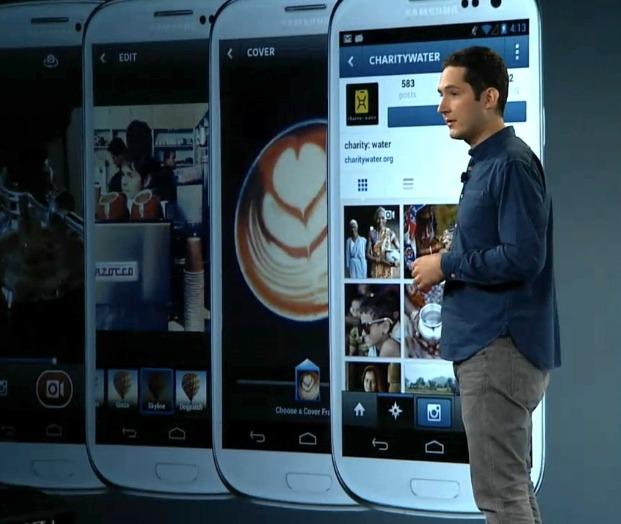
Instagram Introduces Adverts

The photo sharing social network site, Instagram, confirmed last week that adverts will be introduced to the site in an effort to turn the site into a ‘sustainable business’. The site now has 150 million users who share their images on the social media platform, forming a global community. Instagram’s introduction of adverts comes as no surprise as it follows in the footsteps of many other social media networks who have already introduced adverts over the previous months or years. But how will it affect the user experience of the photo sharing network?

Image – www.techhive.com
Instagram announced the addition of adverts to their site on their blog in a post entitled “Instagram a Growing Business”. They stated that “we have big ideas for the future, and part of making them happen is building Instagram into a sustainable business”. This shows that the chief reason for the introduction of the ads was as a way of monetizing the business and to build revenue from the popular photo sharing site. It follows the moves of other social media platforms who have already introduced similar money-making features – a couple of weeks ago Pinterest introduced “promoted pins”, which look just like ordinary pins but have a special “promoted” label, with a link the learn more about what it is. This has been heralded by Pinterest as a move to “plan for the future”.
Instagram has stated that US users will start to see the occasional ad appearing in their Instagram feed in the next few months. These will be in the same format as the photos and videos that they already see from the brands they follow on Instagram, but instead the adverts will be from brands that they are not already following on the site. They have declared that this form of advertising will start slowly, in order to maintain the enjoyable experience of using Instagram, and making sure that the adverts they do include are high-quality, comparable to those you see when you flip through your favourite magazine.
The social network stated that they plan on delivering “a small number of beautiful, high-quality photos and videos from a handful of brands that are already great members of the Instagram community”. This shows a similarity to the introduction of promoted pins by Pinterest, with a focus on blending in the adverts to the existing content so that it is more subtle.
Instagram has also commented that its users will still be in control of their news feed on the site, and will be able to control which ads they see and which they don’t – if you see an ad you don’t like you will be able to hide it and provide feedback to the company to say why you didn’t feel that it was right for you. They hope that this will help to constantly improve the experience that you get from Instagram, and provide the user with an enjoyable experience of the adverts that they see so that they do not feel bombarded by irrelevant content.
For now, the sound of advertisements on Instagram does not seem to threaten the user experience and we will have to wait and see how the adverts actually work when introduced to the site. If they are filtered in seamlessly with the existing content which you follow on the site, it shouldn’t affect your experience of using the site too much. However, if the company begins to get carried away by its monetization, it could significantly affect the user experience and could affect the number of users on the site.

This latest announcement may however be good news for a number of smaller brands struggling to compete with the huge following of successful brands who use Instagram, such as Nike and Starbucks, as it will provide them with the opportunity for their content to be seen by a much greater volume of people if they choose to pay for their ads to feature on the site. At the moment the use of Instagram ads still relies on a heavily visual form of advertising, and therefore it is limited in its scope of which brands will use the feature for now. But if your brand relies on beautiful imagery, and fits in with the square format and filtered images which the site creates, then it could be a great new place to advertise to a receptive audience who have logged on to the site to see visually appealing content.
What do you think?
Do you think the introduction of adverts to Instagram will ruin your experience of the photo
sharing site? Would you use Instagram ads as a way to market your product to a greater
audience?

Thursday, 22 August 2013

Social Media Is Changing How We Do Business... Are You Ready?


It’s not unheard of for an SME business owner when asked who manages their social media to reply, “One of the team”. Often, that management of social sites is secondary to the role the team member was hired for e.g. sales or customer service.

When the company is larger with a bigger customer base the thinking is generally different. The company may have an IT department, Marketing department and someone tasked specifically to manage social sites. While the larger company appears to take social media more seriously by dedicating resources to it, it may not be enough.

Lack of Cohesion

This was the case with a company I worked with recently. Having done my research before meeting them, I could see they had a huge campaign going on with daily winners winning substantial prizes. Each day the names of winners were uploaded onto the company website but nothing was mentioned on their social sites, and given they had over 40,000 Fans on their Facebook page, who could have been doing a lot of talking and sharing about those winners, it seemed like a missed opportunity. When I asked about it I was told “I’m not given that information”. Sitting in a room with key members from management, IT, Marketing and their social site manager it was clear a lack of cohesiveness existed between departments.

Fluffy Stuff
Now that’s not unheard of. We know about love/hate relationships in many organisations between technology and marketing departments but one without the other and a company is unlikely to survive. With the recent arrival of social media into the business mix it’s rocked the boat a bit. You’ll find marketing people who think social media sits under IT while IT folks view it as the fluffy stuff with nothing whatsoever to do with them. It’s this lack of cohesiveness that can have a Social Media Manager going it alone as was the case with the company I was doing the consulting with.

Integrate to Success

In the case of the company I recently worked with, the Social Media manager was never invited to marketing meetings, so there was little collaboration on how to promote campaigns using traditional methods as well as Social Media. It meant the marketing department didn’t view their online community of over 40,000+ people as their primary target audience. Make sense? No, it doesn’t and it took sitting in a room with all the relevant people there for this otherwise very forward thinking company to see that. Like many other companies they hadn’t fully grasped the power of integrating social media into their overall marketing goals. By the end of our session together there was a complete turnaround in their thinking.

The Age of the Customer

If the goal is to be successful in what is now becoming known as ‘The Age of the Customer’, businesses need to adapt and the starting point is seeing technology, marketing and social media as deeply entwined.

Monday, 19 August 2013

The Importance Of Knowing Your Audience On Social Media


To create a successful social media strategy for your business you must know your audience. Social media is all about communication and conversation, how can you have a proper conversation if you don’t know anything about the people you are talking to? Before you create or post any content, you need to know who will see it. If you only know a little about your audience to start off with, using that to your advantage when creating a strategy can help you not only engage with your audience, but also understand more about your audience as a result. Here are the questions you should ask yourself in order to help you get to know your business’ audience on social media:

1. Why?

Posting content without prior knowledge of its potential audience is just a Random Act of Marketing: you might have some success, but your content won’t have anywhere near the same amount of engagement as content posted with a targeted audience in mind.

For your social media strategy to have any success, you must first work out who you are trying to reach and then the best way to reach them. Be aware that different networks will have different audiences, so make sure you create content which suits each social media site.

2. Who?

So, knowing your audience on social media is of the upmost importance. After the ‘why’, though, comes the ‘who’: who are all the people following you on Pinterest, Twitter, Facebook and Google+? Who are all the people sharing and engaging with your content? Who is retweeting you on Twitter and repinning your pins on their Pinterest boards?

You need to work out who engages with your content in order to work out what sort of content they are more likely to engage with. Find out what demographics your fans belong to: their age, gender, professional status, location and income. For example, if your fans are predominantly of a younger demographic, they might be more likely to share funny or fashionable content.

If you’re not sure who your fans are on social media (bear in mind we haven’t got to the ‘how’ yet) it’s a good idea to find out what demographics your brand appeals to outside of the world of social media. Your customers in the real world will give you a great insight into your fans on social media. However, there are other variables that need to be taken into account, so don’t just presume that your fanbase is made up purely of actual customers: you may discover a completely new support base online thanks to your adoption of social media.

Always be aware that the number of people engaging with your content is miniscule compared to the number of people who aren’t, but could be. There are those that see your content but don’t engage, as well as the millions who haven’t even see your content yet. Make sure you don’t just create content to please the people engaging with it already, create content that will attract new fans and followers: after all, you want to be building your support base, not just maintaining what you’ve got.

Having worked out who your fans and followers are, and what makes them tick, you should work out who the most influential people within your fanbase are. Find out which of your fans have the most followers themselves, and which fans get their own content shared the most often. If you can identify the influencers within your fanbase, you can engage with them more frequently and perhaps create a few brand ambassadors.

3. What?

There are actually a number of ‘what’ questions you need to ask yourself when researching your social media audience. The first, and arguably the most important, is ‘what are people saying about your company?’ Not only will this give you an insight into what your audience want from your company and from your social media presence, it will also help you better engage with customers and monitor what they think about you. You should always be monitoring sentiment analysis to get a better understanding of your customers and how your brand is perceived.

You should also find out what your fans and followers are saying on social media in general. Very often a throwaway tweet or Facebook status can give you a great insight into what a customer’s wants are. By monitoring what people say and post, you can also find out what your audience’s interests are. Create content that will pique the interests of your audience and make them more likely to engage with you.

What networks are your fans on? If your audience is far more active on Twitter than on Pinterest, and you don’t have enough time to manage both, focus on posting content and engaging with followers on Twitter to make the most of your social media presence. In answering this question you may also discover more about your audience, as different demographics prefer different sites. Of course, this means that if you have a similar number of fans on Pinterest and Twitter, they won’t necessarily be the same, so you should tailor your content to the site it is posted on and the people who will see it.

The final ‘what’ question you should ask of your audience, a question that is getting more and more important as mobile social media use increases, is ‘what devices are my fans and followers using to check their social media?’ It is no good posting image-laden content if all of you followers are on mobile, as they won’t get the full impact of a large image on a phone.

4. When?

There is only one question in this section, but discovering its answer is vital to the success of your business’ social media strategy: when are your audience active online?

Don’t post your content in the evenings if your audience is using social media in the morning, as they won’t necessarily see it; post when the majority of your audience is active on social media so that they are more likely to see it and interact with it. Ideally, of course, you will be able to post content regularly throughout the day but, if not, work out the best strategy in order to get the most views, engagement and reach.

5. How?

So, the burning question: how do you find out all you need to know about your business’ audience on social media? Well, you can always ask. Ask questions on Twitter and Facebook about what your customers like and dislike, what makes them tick, or create surveys to discover more about your fans and followers.

Take the time to research your audience. How do your followers describe themselves in their Twitter bios? What have they liked on Facebook? Don’t forget to measure the success of your own campaigns within your audience.

Another important question to ask your followers is how they found out about you. This can give you a great insight, not only into the minds of your audience, but also into how successful your social media presence is. Again, you can use a survey to do this.

There are a number of analytical tools which you can use to make researching your audience easier: Klout can help you work out which of your fans and followers are the most influential, while Followerwonk can help you delve into the details of your Twitter followers.

How do you research your social media audience?

Monday, 12 August 2013

10 Facebook Marketing Mistakes to Avoid

At this point, most people know to market their business on Facebook — there are more than 900 million people on the social platform, constantly "liking," sharing, commenting and posting. We've gone over some best practices for Facebook marketing, discussed hot trends and shared customer service tips, so now you know what you should do.

But there are a few things that you shouldn't do. Mashable spoke with Facebook's Communications Manager Elisabeth Diana, Head of Measurement Platform and Standards Sean Bruich and Director of Online Operations Sarah Smith, as well as Buddy Media CEO Michael Lazerow to learn more about the most common Facebook marketing mistakes.

"There's actually a science behind this — yes, it's an art, but we have found some strong conclusions that there are levers that marketers can pull to be more successful," says Bruich, whose team recently studied 1,200 posts by 23 brands over a month-long period, using quantitative measurements to determine the unique impact of each post. "This is not a black box ... there's a lot of opportunity to understand how to make your marketing better."

Below, we outline 10 of the most common Facebook marketing mistakes. Have you fallen victim to any of them? Tell us about your experiences in the comments.

1. Not Filling Out the Page Completely

This one's obvious, but make sure you're using Facebook to its full capacity and fill out your Brand Page. Businesses should have hours, address, photos and more on their Brand Pages, so users can gather this information quickly. And if you're opening a new location, either list it or (if you decide it's best to create separate Brand Pages for your locations) add a new Page to Facebook. Make sure you also nab a good vanity URL — bonus points if it's also your web URL and Twitter handle.

2. Using an Illegal Cover Photo

The cover photo is prime real estate on your Facebook Brand Page, and it's the first thing consumers notice. Therefore, it ought to abide by Facebook guidelines, which state that a cover photo can not have:


Price or purchase information (including discounts, such as "40% off")


A call to action to "like," share, comment, download, "get it now" or "tell your friends"


Contact information, such as web, email or mailing address

In your cover photo, use something that flaunts your product and captures the essence of your brand — a close-up of food is great for restaurants, a shot of a runway show is perfect for fashion labels and a diaper company could have a few cute babies. Don't forget to switch your photo up every once in a while — you can refresh your image to promote a new or different product, an upcoming event or a new location. More than half of the brands Buddy Media recently analyzed had only uploaded one cover photo, and another 21% had only uploaded two cover photos. "Switch it up to keep things fresh," Lazerow says. After all, the cover photo is pretty much a billboard on your Facebook Page — you should use it to promote your best offerings. Just remember to abide by the guidelines above.

3. Breaking Contest Guidelines


While it's hard to stay on top of the fine print, it's imperative that any Facebook contest you run is legal. Contests always add a layer of complexity, as state and federal laws may differ, so here are a few things you need to know: Contests asking for submissions or votes via comments, "liking" or other Facebook UI functions are prohibited. You as a brand are responsible for the lawful operation of that promotion, including official rules, terms and eligibility requirements. Contests or giveaways must be administered within Apps on Facebook.com — on a Canvas Page or a Page App. Your Page must acknowledge that the promotion is not sponsored, endorsed, administered by or associated with Facebook.You cannot notify contest winners through Facebook (wall post, message, chat, etc.)


There are several third-party providers that help brands run Facebook promotions legally, and most have free trials. A few prominent ones are Wildfire, Offerpop and Buddy Media.

4. Overposting

Less is more. Facebook suggests that brands start out with one or two posts a week to feel out the platform and see what works. Many brands post once per day, and many find that posting more than once per day can actually have an adverse effect on engagement. Facebook indicates that the averages user "likes" four to six new Pages each month, so your content is constantly fighting for more attention from its fans. It's better to post one excellent item per day instead of two decent ones.

Even if you're only posting a few days per week, you can still keep your Page active on a daily basis. Check your Page and "like" or respond to comments on your Brand Page, and remember to tag the people you're replying to — that's a great and easy way to get people to come back to your Page to engage more. And it can be easily done with the new Facebook Brand Page Manager app. (Facebook says tagging features are in the works for a later version of the mobile app.)
5. Focusing Too Much on Likes

Sure, Likes are important — the more Likes you have, the more people your message is reaching. But Likes are just step one. Step two is to confirm that you're reaching the right audience and keeping them engaged, says Diana. If they "like," comment and share your content in a regular basis, then they have become brand advocates who are pushing your message to their friends.

The post above, from the Book of Mormon Facebook Page, shows solid engagement on all counts — Likes, comments and shares — thanks to a quirky photo and a clear call to action.

It's also important to note that content shares better on certain days — Buddy Media research has found that engagement rates for Facebook posts are 18% higher on Thursday and Fridays. So if you're strategic, you can get more engagement with fewer posts. Using the new posting tools, you can queue up the content you want to share throughout the week and then ride the wave of engagement over the next few days. "Brands that aren't paying attention to their own data and when their fans are engaged will not see the reach and engagement they desire," says Lazerow. Last year, Buddy Media released a more granular study of industry-specific engagement stats, indicating what days and times of day are best for certain kinds of content, which also can be useful for planning your editorial calendar.

6. Too Much Text
 

Facebook research has shown that posts between 100 and 250 characters — one or two lines of text — get 60% more Likes, comments and shares than ones that are more than 250 characters, says Diana. Buddy Media research found a similar trend, determining that posts with 80 characters or less in length have 27% higher engagement rates. The moral? Like content on Twitter, keep it short and sweet. Of course, your post should be different than your content on Twitter, or else your fans don't have a reason to follow you on both platforms.

One tip for making sure the post is as engaging and short as possible is to remove the link URL from the text field in the post. Once you paste the URL in the field, the page title, a blurb and a thumbnail will populate — you can then delete the URL to streamline the post and cut the clutter (see above).

7. Posting Boring or Off-Brand Content

This might come as a surprise (well, we hope not), but the things you post on Facebook should be relevant to your brand. If you own a company that makes iPhone cases, it doesn't make sense for you to post about a Kickstarter project just because you think it's cool. Being on-brand is a significant predictor of engagement — just because people like your product doesn't mean they share all of your interests, so just give them a mix of content related to the product. Since your fans don't see every single thing you post, you risk wasting their eyeballs on irrelevance and incurring negative engagement on the post.

8. Ignoring Insights


Facebook Insights offer a lot of useful information — it'd be silly to not take advantage of the data. The Friends of Fans metric is particularly interesting, as Friends of Fans typically represent a much larger set of consumers than a brand's Fans. In fact, for the top 1,000 brands on Facebook, the Friends of Fans number is 81 times larger than the fan count, says Bruich. This means there's a huge potential audience that can be tapped into by posting engaging content (because your fans' activity will show up in friends' feeds) and by enhancing this content with other Facebook ad tools, such as Promoted Posts.

Smith says consumers are 51% more likely to buy something if they know their friends did, so capitalize on the army of advocates who have opted in to learning more about your brand.

You should also pay attention to the People Talking About This (PTAT) and reach metrics in Insights to see how your message is faring in the Facebook ecosystem, and create a comprehensive Facebook marketing strategy based off of what works. "That's the kind of media plan that's going to lead to results," says Bruich. In a sense, you can think of your Facebook audience as a focus group and get a grip on what they want to see more of.

Also check out the real-time insights, which help you see the impact of pinning, highlighting and promoting posts.

9. Being Vanilla
 

While Timeline transformed Facebook into a much more image-based platform, it's important to spice up your content. Too much of anything is boring, and the right mix of polls, questions, photos and video will keep people engaged and excited about your brand. Humans crave diversity, and different kinds of posts drive different kinds of engagement — so a smattering will lead to more well rounded engagement. For example, someone might comment on a question post, share a photo and "like" a video, so it's best to give consumers a wide swath of ways to engage with your brand.

Pro tip: Asking questions is typically a driver of additional comments. The post above by Coffee Bean is a great example of engagement — it's an image that promotes a live Q&A session on the brand's Facebook Page.

If your brand is experimenting with video, Diana has an interesting finding to keep in mind — videos shared from third-party sites (YouTube, Vimeo) generate less organic activity than videos hosted on Facebook.

Regardless of what type of post you're sharing, make sure the tone and voice reflects the personality of your brand. Virgin America is cheeky, Birchbox is feminine and chatty, MTV is casual and approachable. What's your brand's voice? A Facebook user should know it's your content in their feed without seeing your brand name next to it.

10. Not Making the Most of Facebook's Ad Options

Not all businesses have the budget to employ Facebook Ads in their marketing arsenal. But brands that do could benefit from Bruich's advice about what makes a good ad.

He says the ad needs to be well branded. If it's not clear and obvious who and what the ad is promoting, then consumers will be less likely to recall the ad and the brand. It's also important to have some sort of reward or "payoff," as ads with a reward tend to be more influential over purchasing decisions. Also, try to have the creative in the ad have one focal point — with everything else happening on Facebook, a focused creative unit helps fans recall ads.

Can't figure out what your ad should be? Dig into Facebook Insights and turn the most engaging content into a social ad. "Your content and ads are one and the same," says Lazerow.

You can give your recent content an added boost with Promoted Posts, which extend the reach of your post and are easy to do. Sweet Cheeks Diaper Company, a brick-and-mortar and online store in Maine, saw a 49x return (tracked via the unique URL) after promoting a photo on its Brand Page, says Diana.
Conclusion

Facebook marketing is a crucial way to build a fan base and spread word about your business. But a successful campaign doesn't have to be a drain on your time or your wallet. A few minutes a day and a strategic plan can have an immense impact on your brand's Facebook presence, as long as you avoid the mistakes above.

Friday, 9 August 2013

5 Social Media Tactics to Increase ROI

Social can be one of the most challenging platforms for brands to measure return on investment. Companies that grew up on traditional advertising and metrics often have trouble making sense of the value of the online ecosystem. But with 52% of U.S. consumers using the web as their primary purchase tool, it's an area brands can't afford to ignore.

Last week the commenting and social curation platform Livefyre hosted an evening chat with a handful of influential analysts, marketers and publishers, sharing thoughts on need-to-know ROI growth tools. It's a formula Forrester Senior Analyst Kim Celestre calls "social depth," a fancy phrase for discovering, exploring and engaging with online consumers, eventually leading those conversations back to brands' websites.

Here's the social depth formula broken down into five, easy tips.
1. Engage

User-generated content, blog posts, videos, tweets and chatter are all over the web. Harnessing the power of brand advocates, addressing customer concerns and fixing problems empowers participation. It's easier to put out a fire than it is to ignore it.

People want to interact and create relationships with brands online. Catering to those fans via product giveaways, social interaction and real replies separate the companies that get it from the ones still in the dark.

"The consumer is boss, so we have to match that," explains Andrew Backs, P&G's manager for global business development. "Look for solutions to unlock the consumer voice."
2. Be Authentic

You can't fake it online, says Sid Shuman, who runs social media for Sony Playstation. "They can smell that a mile away."

The same die-hard brand advocates championing your product will be the first to call out shady behavior or content that doesn't reflect brand culture. When in doubt, ask your community for help when it comes to content. Shuman suggests crowdsourcing content for in-house interview and articles. Because they live and breathe the brand, fans "come up with better questions that we could any day," he says.
3. Keep Content Premium

Hitting "publish" is social suicide if the material isn't quality. Take advantage of Wordpress,Tumblr and social media to craft strong messages. Know the rules and follow them: Every network requires a specific approach and language (tweets are written differently than Facebookposts).

Stick to a calendar for posting, and focus on making followers feel part of the brand's family. Using platforms solely as selling tools quickly alienates customers. Hire professionals—and fight the urge to turn sites into content farms or automate feeds.

Peter Yared, CBS Interactive's CTO/CIO suggests using your sites to curate and amplify positive content about your company. "Find the interesting content that’s being posted and use it to bring value to your audience."
4. Integrate Real-Time Apps

Incorporate social into every aspect of what you do, says Jordan Kretchmer, Livefyre's founder and chief executive. Kretchmer's company reports 88% of businesses using Twitter feeds, comments, ratings and reviews on homepages increases user engagement. Forty-two percent boosted their average time on site.

It may sound painfully simple, but adding these tools are the equivalent of a restaurant showing off a top health code letter grade. It empowers consumers to interact and share content. Plus, constant updating improves search engine visibility much more than static pages.
5. Experiment

Nothing risked is nothing gained, especially when it comes to social. Fail and see what works. Test tone, style and new monetizing tools, such as native advertising, which serves sponsored content, tweets and Facebook stories. eMarketer reports 73% of U.S publishers now offer some form of native advertising. But be careful: This hot topic still often fails to hook users, as do most click-bait attempts.

Did we miss something? Engage with us and share your tips in the comments below.